TL;DR
- On $225,000 in NYC, you keep about $145,273 a year, roughly $12,106 a month. Tax takes $79,727. That is a 35.4 percent effective rate on the salary that is supposed to mean you made it.
- The next dollar is taxed at about 49 percent. At $225k you are in the 32 percent federal bracket, plus about 10.9 percent to New York while its recapture phases in, plus 3.876 percent to the city, plus Medicare. Of every $10,000 bonus, you keep about $5,100.
- You earned an extra $75,000 to get from $150k to $225k. You kept $45,152 of it. The governments took the other $29,848, about 40 percent of the raise. Climbing costs more the higher you go.
- After a Manhattan one-bedroom and the subway, you have about $7,109 a month, and you are still renting. A quarter-million-dollar salary in this city buys a nice lease.
You make $225,000 a year. In most of America that is a doctor, a partner, a person who has unambiguously arrived. In New York it is a first-year associate who bills 2,000 hours, keeps about 65 cents on the dollar, and still signs a lease instead of a mortgage.
Here is where the quarter-million goes.
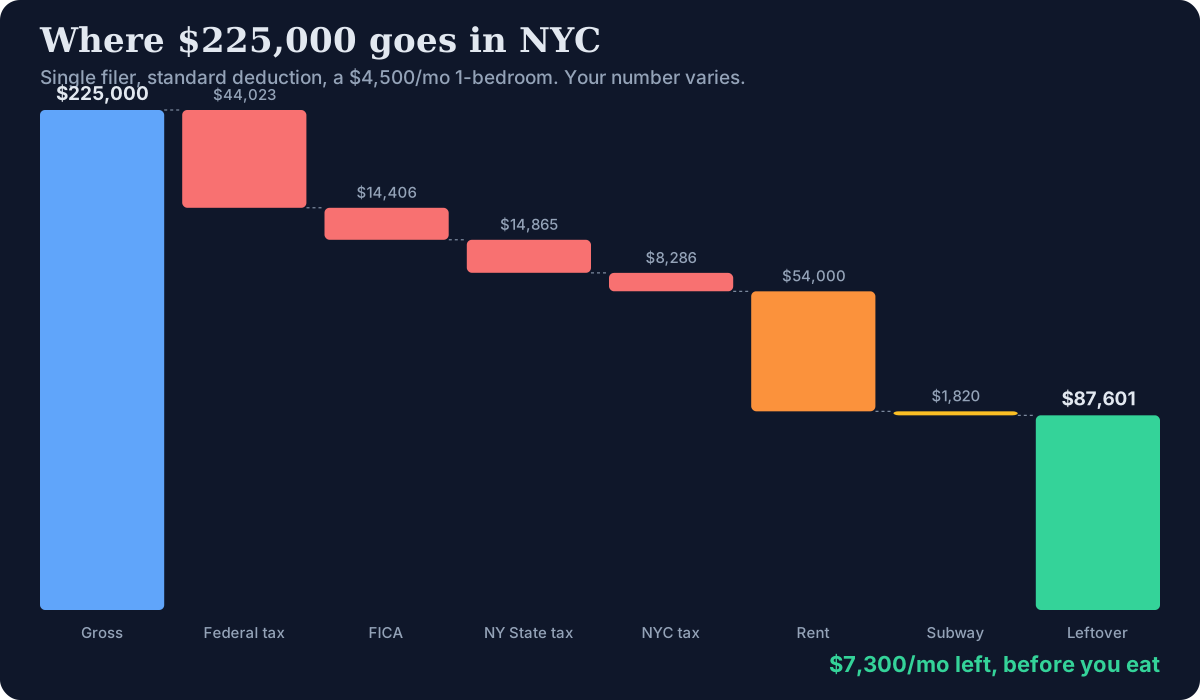
Tax takes $79,727 before you make a single choice about your own money. That is an effective rate of 35.4 percent, and it is not the number that should scare you. The number that should scare you is the marginal rate.
Want the real money math on living in NYC?
Take-home pay, taxes, rent, and what a New York salary actually keeps. Free, every weekday.
Free. No spam. Unsubscribe anytime.
The 49 percent trap
Your effective rate is 35 percent. Your marginal rate, the tax on the next dollar you earn, is about 49 percent. At $225,000 you have climbed into the 32 percent federal bracket. Stack New York State at about 10.9 percent (the 6.85 percent bracket plus a recapture that keeps phasing in until your income clears $265,400), the city at 3.876 percent, and Medicare on top, and nearly every additional dollar you bill is split almost evenly with the government.
This is the part that breaks brains at bonus season. You grind out the hours, the firm hands you a $40,000 bonus, and roughly $19,700 of it vanishes before it reaches your account. You keep about $20,300 of a $40,000 reward. The harder you work in this bracket, the bigger the silent partner’s cut.
And the silent partner is three governments at once. Washington you would pay anywhere. New York State and New York City you pay because you chose to live and work inside the five boroughs instead of ten miles west, where the city line item is zero.
You climbed, and the city took 40 percent of the climb
Here is the trap drawn in full. A single New Yorker on $150,000 takes home about $100,121. On $225,000, about $145,273. So the $75,000 raise that moved you up a tax bracket added about $45,152 to your actual life. The governments kept the other $29,848, roughly 40 percent of the raise.
That is the mechanism nobody explains when you are negotiating. The sticker jump from $150k to $225k looks like a 50 percent raise. In your bank account it is closer to a 45 percent raise, because the tax code is progressive and you just fed it a larger share of every new dollar.
Want the real money math on living in NYC?
Take-home pay, taxes, rent, and what a New York salary actually keeps. Free, every weekday.
Free. No spam. Unsubscribe anytime.
A quarter million, and you are still a renter
Taxes leave you about $12,106 a month. The median Manhattan one-bedroom asks $4,845.1 The subway is another $152.2 That leaves roughly $7,109 a month, which is a genuinely good number, until you remember what it is supposed to buy.
It does not buy an apartment. A 20 percent down payment on a modest $900,000 Manhattan one-bedroom is $180,000 in cash, before closing costs and reserves, and a first-year associate is usually carrying six figures of law-school debt at the same time. You clear the income bar for the mortgage years before you clear the cash bar for the down payment. So you rent the one-bedroom and watch $4,845 a month go to a landlord instead of equity.
That is the quiet truth about the top of the salary band in New York. The money is real and the life is comfortable, but the city is engineered so that even a quarter-million-dollar earner is renting, taxed at the margin like a partner, and writing the largest checks of anyone in America for the privilege of living here.
The numbers above are computed by the engine. Methodology: tax year 2026, single filer, standard deduction ($16,100 federal / $8,000 NY), no pre-tax 401(k) or health premiums, a $4,845/mo one-bedroom (the StreetEasy Manhattan median, August 2026), and the $35/week OMNY fare cap annualized. New York State tax includes the tax-table-benefit recapture, which at this income adds about $960 and pushes the state’s rate on each new dollar to about 10.9 percent until income clears $265,400. An estimate; your number varies with your loans, your bonus, and your filing status.
If you want the rest of the picture:
- The Leftover, every salary band. The full ladder from $90k to $250k, and what each one keeps.
- What $150,000 actually keeps in NYC. The same math, one bracket down.
- Why your property tax bill is so unequal. What changes the day you do manage to buy.
- How NYC spends the money it takes. Where your $8,286 city tax goes.
Want the real money math on living in NYC?
Take-home pay, taxes, rent, and what a New York salary actually keeps. Free, every weekday.
Free. No spam. Unsubscribe anytime.
Footnotes
-
StreetEasy Data Dashboard, median asking rent for a one-bedroom, Manhattan, August 2026. streeteasy.com/blog/data-dashboard ↩
-
MTA fare update, January 2026 ↩
Frequently asked questions
What is the take-home pay on a $225,000 salary in NYC?
About $145,273 a year, or roughly $12,106 a month, for a single filer taking the standard deduction. That is after $43,304 in federal income tax, $14,926 in FICA, $13,211 in New York State income tax (including about $960 of tax-table-benefit recapture), and $8,286 in New York City resident income tax. Total tax: $79,727, an effective rate of 35.4 percent.
What is the marginal tax rate on a $225,000 NYC salary?
About 49 percent on the next dollar. At $225,000 a single filer sits in the 32 percent federal bracket; add New York State at about 10.9 percent (the 6.85 percent bracket plus the recapture phasing in, until income clears $265,400), New York City at 3.876 percent, and Medicare at 1.45 plus 0.9 percent, and the next dollar you earn is taxed at roughly 49 percent. That is the number that matters for a bonus: of every extra $10,000 you bill, you keep about $5,100.
Can a biglaw first-year afford to buy an apartment in NYC?
Not easily, and not yet. On $225,000 the take-home is about $12,106 a month, and the median Manhattan one-bedroom asks about $4,845, leaving roughly $7,109 before student loans, which for a recent law graduate are often six figures. A 20 percent down payment on a modest $900,000 Manhattan one-bedroom is $180,000 in cash, plus closing costs and reserves. A first-year associate clears the income bar for the mortgage long before clearing the cash bar for the down payment. Most rent.
How much more do you keep going from $150,000 to $225,000 in NYC?
About 60 percent of the raise. Take-home on $150,000 is about $100,121; on $225,000 it is about $145,273. So earning an extra $75,000 of gross adds about $45,152 to your take-home. The city, state, and federal governments take the other $29,848, roughly 40 percent of the raise. The higher you climb, the larger the share of each new dollar the tax code keeps.
What is the effective tax rate on $225,000 in New York City?
About 35.4 percent, combining federal income tax, FICA, New York State income tax (with recapture), and the New York City resident income tax. That is the all-in effective rate on gross wages for a single filer with the standard deduction. The marginal rate on the next dollar is higher, around 49 percent.